Bookkeeping

Five Tips for Great Record-Keeping

Posted in Bookkeeping, How To & Tips, Internal Revenue Service on April 26th, 2010 by Jenny Furst – Be the first to comment

There are many records you have that may help document items on your tax return. You’ll need this documentation should the IRS select your return for examination. Here are five tips from the IRS about keeping good records.

  1. Normally, tax records should be kept for three years.
  2. Some documents — such as records relating to a home purchase or sale, stock transactions, IRA and business or rental property — should be kept longer.
  3. In most cases, the IRS does not require you to keep records in any special manner. Generally speaking, however, you should keep any and all documents that may have an impact on your federal tax return.
  4. Records you should keep include bills, credit card and other receipts, invoices, mileage logs, canceled, imaged or substitute checks, proofs of payment, and any other records to support deductions or credits you claim on your return.
  5. For more information on what kinds of records to keep, see IRS Publication 552, Recordkeeping for Individuals, which is available at IRS.gov or by calling 800-TAX-FORM (800-829-3676).

Links: Publication 552, Recordkeeping for Individuals ( PDF 61K )

If your firm gives employees gifts—any gifts— better know what’s taxable

Posted in AIPB, Bookkeeping, How To & Tips on October 28th, 2009 by Jenny Furst – Be the first to comment

Nontaxable gifts: Fruit baskets, hams, turkeys, wine, flowers and occasional entertainment tickets, such as to a show or sporting event, generally are nontaxable de minimis fringes.

Taxable gifts: Gift certificates (“cash in kind”) are wages subject to FIT, FITW, FICA, and FUTA, even for a de minimis item. For example, a gift certificate for a turkey is taxable, even though giving a turkey as a gift is not. Cash gifts of any amount are wages subject to all taxes and withholding. [26 CFR 1.132-6(e); TAM 200437030]

Get ready for a sales/use tax audit

Posted in AIPB, Bookkeeping, How To & Tips on October 26th, 2009 by Jenny Furst – Be the first to comment

The target: Buyers from other states who fail to pay a use tax on purchases made online or by phone. Vendors in these states are not responsible for collecting sales taxes unless they have a physical presence in the buyer’s state, so their state sales tax will not appear on the invoice. But the buyer is still responsible for reporting the purchase and paying the use tax to his/her local tax authority. Failure to do so can add interest and penalties to taxes owed.

Biggest mistake: assuming that not reporting such purchases eliminates the problem. States now monitor large out-of-state sales and may notify the buyer’s state, which can then track down the buyer. Also: Customs transmits declaration statement data to state tax agencies, enabling them to track overseas purchases.

Best bet: Pay the use tax on inter-state purchases. Amounts are not usually large—unless failure to pay results in interest and penalties.

But your state revenue department will be going after even the most honest, tax-paying businesses for more revenue by selecting you for a state sales and use tax audit.

Here’s what you should do:

read more »

How to Book Returned and Postdated Checks for Customers

Posted in AIPB, Bookkeeping, How To & Tips on October 15th, 2009 by Jenny Furst – Be the first to comment

To avoid mispostings—and liability for another employee’s misdeeds, follow these simple steps:

Returned checks. When the bank notifies you that it is returning a customer’s check for NSF (not sufficient funds), debit the customer’s account immediately—even if you plan to redeposit the check the same day. For good internal controls, instruct your bank to address all returned checks to someone other than you—possibly the owner or a senior manager. This can protect you if an employee tries to use fictitious checks to cover temporary shortages.

Postdated checks. If a customer gives you postdated checks, treat them as a note receivable. In other words, debit it to Notes Receivable, not to Cash. On the date written on the check, deposit it to your firm’s account, debiting Cash and crediting Notes Receivable.

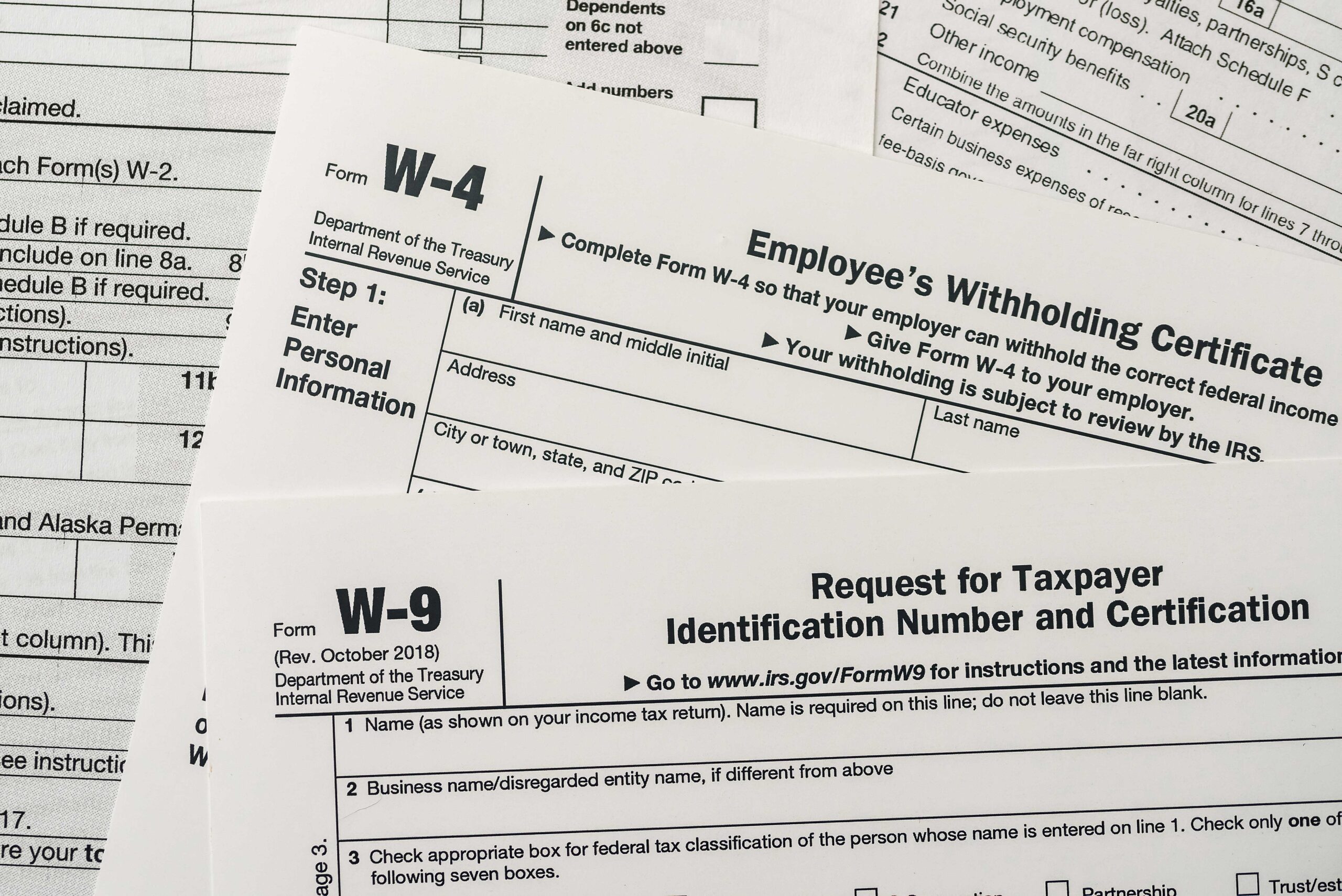
How To Implement a New W-4 —and Handle Complaints

Posted in AIPB, Bookkeeping, How To & Tips on October 1st, 2009 by Jenny Furst – Be the first to comment

Problem: Employees try to increase their take-home pay by handing in a new W-4 with more withholding allowances or by claiming exempt from withholding.

Solution: Tell employees that you are not required to post the new W-4 until the first payroll period ending on or after the 30th day from the date the new W-4 was submitted (see IRS Circular E). This is the most time that the law allows.

Example: Joe is paid on the 15th and 30th of each month. On September 10, he gives you a new W-4. The September 10th withholding changes must be applied to his paycheck of October 15, the first payroll period following September 30.

How to avoid triggering a Wage-Hour audit —and protect yourself if you are audited

Posted in AIPB, Bookkeeping, Employment Tips, How To & Tips on September 12th, 2009 by Jenny Furst – Be the first to comment

To avoid major penalties, audit your own practices to ensure FLSA compliance, advises Shawn Smith, Next Level Consulting LLC, Harrison, NY. She cites four common problems:

1. Worker classification. You cannot avoid overtime pay simply by paying employees a salary and classifying them “exempt.” To avoid misclassification, know what jobs are exempt (regardless of whether they are salaried or paid by the hour), then review job descriptions and how each job is actually performed.

2. Docking pay. An exempt worker docked for a partial-day’s absence may lose his/her exempt status, costing you retroactive overtime pay, unless the docking is connected to an FMLA-related leave.

3. Voluntary or unauthorized work. Nonexempt employees must be paid for time worked, voluntary or not. Even if your policy requires that a manager approve paid overtime, your firm must still pay at least 1½ x the employee’s hourly rate for each hour worked over 40 hours in the workweek.

read more »

Journal entries: Recording the trade-in of an asset

Posted in AIPB, Bookkeeping, How To & Tips on July 28th, 2009 by Jenny Furst – Be the first to comment

In 2006, your firm purchased a copier for $20,000. To date, depreciation expense of $12,000 has been taken. In 2009, your firm trades in the copier for a new one costing $25,000. The trade-in allowance is $3,000. What is the journal entry to record the trade-in?

Copier (new)                                Debit 25,000
Accumulated Depreciation   Debit 12,000
Loss on Trade-In                       Debit   5,000

Copier (old)                                             Credit    20,000
Cash                                                            Credit    22,000*

* $25,000 for new copier – $3,000 trade-in allowance for old copier = $22,000 cash required

The new copier is recorded at list price. The cost of the old copier and its related, accumulated depreciation is removed from the books, and the loss is recorded.

6 early signals of customer payment problems —what to do

Posted in AIPB, Bookkeeping, How To & Tips on July 20th, 2009 by Jenny Furst – Be the first to comment

Here are some useful tips to cut your company’s losses in the recession.

Although the downturn has changed normal payment patterns, when you see any of these signs, management would be well advised to act before it’s too late.

1. Loss of contact. Defined as two broken promises to pay. Accept one promise. The second time, ask in a direct, friendly way if this isn’t the second promise, why it’s late and exactly when you’ll be paid. Other loss of contact: NSF checks, never in, no answer, on hold too long.

2. Abrupt personnel changes. Your contact leaves. Nonpayment is blamed on personnel shifts. Always assume the worst. Say: “Let me talk to your superior or whoever pays the bills.” (It may be the boss.) Pros call daily to get the right person. If they promise to call back, set a firm schedule. No call is loss of contact.

3. Any banking change. If nonpayment is blamed on changing banks, ask for the name of the bank and bank officer. (Refusal is a red flag.) Call the bank: “I’m confirming that _____ opened an account.” Pros also ask if it’s “a satisfactory situation” (bank may have denied financing), and what banking business is being done.

4. Unusual disputes (stalls). At 30 days: “The check is in the mail.” At 60 days: “Wasn’t that the shipment that. . .?” Probe and question. Genuine complaints are usually prompt and detailed (invoice numbers, etc.). The vaguer a complaint, the more suspicious it is. Ask: “Why haven’t I had something on this in writing?”

5. Intimidation. Debtors sensing a non-pro calling may be rude to deter future calls. Ignore it. Stick to the business at hand: nonpayment. Keep probing. “Will you pay? when? etc.” Try humor (“Get up on the wrong side of the bed?”). If it fails, the intimidation is deliberate. Don’t be afraid to report intimidation to management. These cases end up with collectors (bosses hate intimidation, too).

6. Change in payment pattern, especially one following an earlier change when the recession began. For example, a regular 45-day payer starts paying in 70 days and only after two phone calls. Act now or the next check will come in 120 days. Say: “You’ve been great about paying, always on time. Now, 45-day payments come in 70 days. Where are we going?” If there’s no good reason (e.g., a temporary problem), it’s a red flag.

What to do when it’s already too late

Too often, management makes unrealistic demands on debtors who can’t possibly pay (“We want it all now“). The debtor then avoids talking to you at all. Why lose money, and possibly a good customer, due to a customer’s temporary, unexpected reversal?

The solution: Focus on your cash flow, not the customer’s debt, regardless of whether it is $1,000 or $10,000, by setting up a realistic payment schedule as follows:

read more »

Make sure your company or client Is properly insured

Posted in AIPB, Bookkeeping on July 14th, 2009 by Jenny Furst – Be the first to comment

Is your company or client properly covered?

Most owners think they are “insured.” But it is coverage a firm does not have that can put it out of business. Check this list from Gaebler Ventures, a venture capital firm:

Exposure

Coverage

Tools and equipment (used off-premises) Contractors’ equipment floater
Stock (inventory) Usually insured as part of business personal property. If values fluctuate a lot during the year, a reporting form may be appropriate
Property of others in possession for storage, service, or repair May be covered under business personal property or special types of coverage
Damage to boiler, A/C, etc. Boiler and machinery coverage
Loss or damage to stock transported in an owned vehicle Motor truck cargo coverage
Loss or damage to property shipped via common carrier Transportation coverage
- via mail Mail coverage
- via common carrier, overseas Cargo policy
Loss due to faulty discharge of water from automatic sprinkler system Usually covered by commercial building and business personal property coverage
Lost profits due to insured loss Business interruption insurance
Expenses necessary to continue business operations after insured loss Extra expense coverage as part of business income coverage
Loss of rents due to building(s) not being habitable, due to insured loss Generally included in business income coverage
Loss of money due to robbery Robbery and safe burglary insurance
Business operations and premises Comprehensive general liability policy
Products manufactured, distributed, or sold Comprehensive general liability policy, or products-completed operations policy
Work performed by your company under contract, such as construction Comprehensive general liability policy, or products-completed operations policy
Premises owned but not occupied by owner Comprehensive general liability policy
Liability for contractors’ or subcontractors’ work Comprehensive general liability or owners and contractors protective liability
Losses in excess of policy limits or high limits of liability Umbrella liability policy

Be A Social Security Expert

Posted in AIPB, Bookkeeping, How To & Tips on March 27th, 2009 by Jenny Furst – Be the first to comment

The next time an employee or owner asks you about Social Security benefits, you can provdie all the answers, with total confidence.  Here they are:

For retirees born in 1941, full retirement age is 65 and 8 months; in 1942, 65 and 10 months, gradually increasing to 67 for those born in 1960 and later.

Age 50. Benefits start for a disabled surviving spouse.

Age 60. Benefits start for a nondisabled surviving spouse.

Age 62. Benefits start based on the employee’s, spouse’s or former spouse’s earnings (if the former spouse is still alive).

Full Retirement age reached in 2009. Employees born in 1937 or earlier receive full benefits at age 65. There is no limit on earnings and no reduction in benefits for those at FR age.

Full Retirement age reached before 2009. Employees born in 1940 or earlier receive full benefits at age 65. There is no limit on earnings and no reduction in benefits.

Full Retirement age reached after 2009. Recipients can earn $14,160 in 2009 before losing $1 in benefits for each $2 earned.

Important: Just earning 40 credits (formerly “quarters of coverage”) does not make individuals eligible for the maximum Social Security benefit. It simply makes them eligible for retirement benefits at a certain age. Credits are unrelated to the amount of the benefits.

Social Security benefits are based on average earnings over 35 years of work-not just on the last 5 years, as many people think. An adjustment is made to account for changes in average wages since the year the earnings were received. SSA then calculates average monthly adjusted earnings over the 35 years when the worker earned the most money.

Employees can obtain their Social Security earnings by calling 800-772-1213, by visiting an SSA office, or by visiting www.socialsecurity.gov/mystatement.

Reminder: Withhold Social Security taxes on all wages regardless of age or Social Security benefits status.