
Tax Tips

Top Ten Tax Time Tips

Posted in How To & Tips, Internal Revenue Service, Tax Tips on January 5th, 2010 by Jenny Furst – Be the first to comment

While the tax filing deadline is more than three months away, it always seems to be here before you know it. Here are the Internal Revenue Service’s top 10 tips that will help your tax filing process run smoother than ever this year.

  1. Start gathering your records Round up any documents or forms you’ll need when filing your taxes: receipts, canceled checks and other documents that support an item of income or a deduction you’re taking on your return.
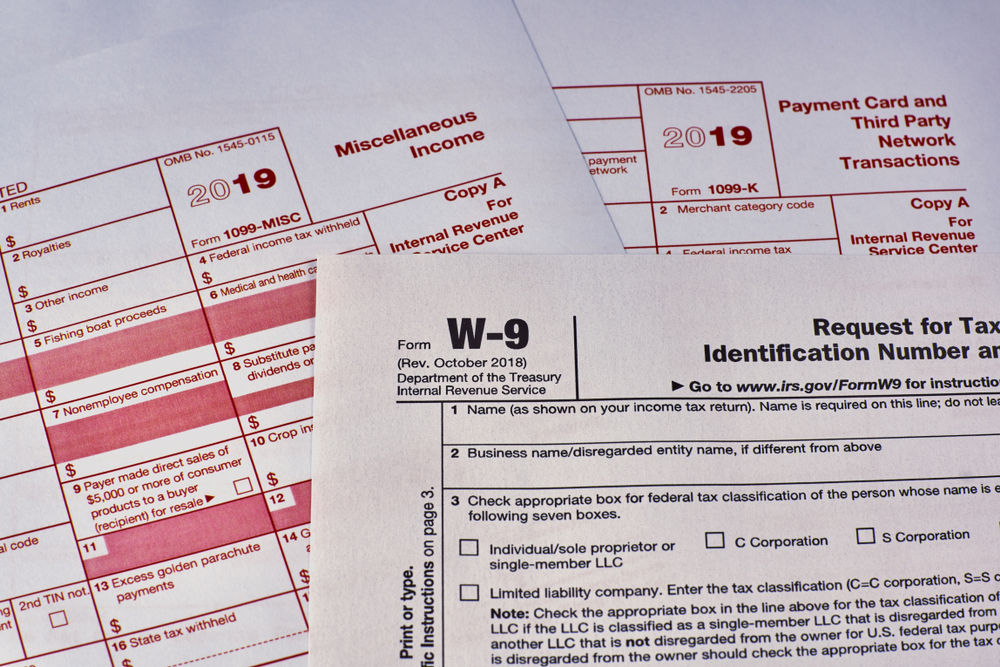
  2. Be on the lookout W-2s and 1099s will be coming soon from your employer; you’ll need these to file your tax return.
  3. Try e-file When you file electronically, the software will handle the math calculations for you. If you use direct deposit, you will get your refund in about half the time it takes when you file a paper return. E-file is now the way the majority of returns are filed. In fact, last year, 2 out of 3 taxpayers used e-file.
  4. Check out Free File If your income is $57,000 or less you may be eligible for free tax preparation software and free electronic filing. The IRS partners with 20 tax software companies to create this free service. Free File is for the cost conscious taxpayer who wants reliable question-and-answer software to help them prepare a return. Visit IRS.gov to learn more.
  5. Consider other filing options There are many different options for filing your tax return. You can prepare it yourself or go to a tax preparer. You may be eligible for free face-to-face help at an IRS office or volunteer site. Give yourself time to weigh all the different options and find the one that best suits your needs.
  6. Consider Direct Deposit If you elect to have your refund directly deposited into your bank account, you’ll receive it faster than waiting for a paper check.
  7. Visit IRS.gov again and again The official IRS Web site is a great place to find everything you’ll need to file your tax return: forms, tips, answers to frequently asked questions and updates on tax law changes.
    read more »

Seven Things you Should Know When Selling Your Home

Posted in Internal Revenue Service, Tax Tips on December 27th, 2009 by Jenny Furst – Be the first to comment

People who sell their home may be able to exclude the gain from their income. Here are seven things every homeowner should know if they sold, or plan to sell their house.

  1. Amount of exclusion. When you have gain from the sale of your home, you may be able to exclude up to $250,000 of the gain from your income. For most taxpayers filing a joint return, the exclusion amount is $500,000.
  2. Ownership test. To claim the exclusion you must have owned the home for at least two years during the five year period ending on the date of the sale.
  3. Use test. You also must have lived in the house and used it as your main home for at least two years during the five year period ending on the date of the sale.
  4. When not to report. If you are able to exclude all of the gain from the sale of your home, you do not need to report the sale on your federal income tax return.
  5. Reporting taxable gain. If you have gain which cannot be excluded, it is taxable and must be reported on your tax return using Schedule D.
  6. Deducting a loss. You cannot deduct a loss from the sale of your home.
  7. Rules for multiple homes. If you have more than one home, you may only exclude gain from the sale of your main home and must pay tax on the gain resulting from the sale of any other home. Your main home is generally the one you live in most of the time.

read more »

Energy-Saving Steps This Year May Result in Tax Savings Next Year

Posted in How To & Tips, Internal Revenue Service, Tax Tips on May 24th, 2009 by Jenny Furst – Be the first to comment

The Internal Revenue Service today reminded individual and business taxpayers that many energy-saving steps taken this year may result in bigger tax savings next year.
The recently enacted American Recovery and Reinvestment (ARRA) of 2009 contained a number of either new or expanded tax benefits on expenditures to reduce energy use or create new energy sources.

The IRS encouraged individuals and businesses to explore whether they are eligible for any of the new energy tax provisions. More information on the wide range of energy items is available on the special Recovery section of IRS.gov. For a larger listing of ARRA’s energy-related tax benefits, see Fact Sheet 2009-10.

Tax Credits for Home Energy Efficiency Improvements Increase

Homeowners can get bigger tax credits for making energy efficiency improvements or installing alternative energy equipment.

The IRS also announced homeowners seeking these tax credits can temporarily rely on existing manufacturer certifications or appropriate Energy Star labels for purchasing qualifying products until updated certification guidelines are announced later this spring.

“These new, expanded credits encourage homeowners to make improvements that will make their homes more energy efficient,” said IRS Commissioner Doug Shulman. “People can improve their homes and save money over the long run.”

read more »

Start setting aside state sales tax for Web sales in any state

Posted in AIPB, How To & Tips, Tax Tips on May 23rd, 2009 by Jenny Furst – Be the first to comment

The Supreme Court has backed state sales tax on Internet sales. New Mexico had imposed its gross receipts tax on Dell Computer’s Internet sales in the state, even though Dell had no physical presence in the state other than a third-party service tech under contract. State courts found for the state, and the Supreme Court refused to hear the case. Sales taxes on Web sales face more challenges, but the tax should not be ignored. [Dell Marketing LP v. Taxation and Revenue Dept. of the State of New Mexico, No. 26,843, N.M. Ct. App. 2008]

Source: AIPB.org

Five Tips to Avoid Tax Time Stress

Posted in How To & Tips, Internal Revenue Service, Tax Tips on March 20th, 2009 by Jenny Furst – Be the first to comment

Are you looking for ways to avoid the last-minute rush for doing your taxes? Here are some stress-relieving tips to help you.

1.     Don’t Procrastinate – Resist the temptation to put off your taxes until the very last minute. Your haste to meet the filing deadline may cause you to overlook potential sources of tax savings and will likely increase your risk of making an error.

2.     Visit the IRS Online – In 2008, there were more than 330 million visits to IRS.gov. Anyone with Internet access can find tax law information and answers to frequently asked tax questions.

3.     File Your Return Electronically – Nearly 90 million taxpayers filed their returns electronically in 2008. Aside from ease of filing, IRS e-file is the fastest and most accurate way to file a tax return. If you’re due a refund, the waiting time for e-filers is half that of paper filers.

4.     Don’t Panic if You Can’t Pay – If you cannot pay the full amount of taxes you owe by the April deadline, you should still file your return by the deadline and pay as much as you can to avoid penalties and interest. You also should contact the IRS to discuss your payment options at 1-800-829-1040. The agency may be able to provide some relief such as a short-term extension to pay, an installment agreement or an offer in compromise. More than 75 percent of taxpayers eligible for an Installment Agreement can apply using the Web-based Online Payment Agreement application available on IRS.gov.  To find out more about this simple and convenient process type “Online Payment Agreement” in the search box on the IRS.gov homepage.

5.     Request an Extension of Time to File – But Pay on Time If the clock runs out, you can get an automatic six month extension of time to file to October 15. However, this extension of time to file does not give you more time to pay any taxes due. You will owe interest on any amount not paid by the April deadline, plus a late payment penalty if you have not paid at least 90 percent of your total tax by that date. See IRS Form 4868, Application for Automatic Extension of Time to File U.S. Individual Income Tax Return for a variety of easy ways to apply for an extension. Form 4868 is available at IRS.gov or by calling 800-TAX-FORM (800-829-3676).  Taxpayers needing Form 4868 should act soon to be sure they have the item in time to meet the April deadline.

I can’t make my IRS tax payment, what do I do?

Posted in How To & Tips, Internal Revenue Service, Tax Tips on March 13th, 2009 by Jenny Furst – Be the first to comment

IRS has flexibility if you can’t make tax payments due to financial woes.  Call the phone numbers in the IRS correspondence you receive.

The IRS can:

  • Postpone collection actions;
  • Be flexible about missed or reduced installment-agreement payments;
  • Re-value real estate by negotiating an Offer in Compromise (OIC);
  • Offer ways to avoid default on an OIC;
  • Speed up refunds, release levies, and take other actions to help taxpayers.

Go Green, Ride Your Bike to Work and Get a Pretax Deduction for it!

Posted in AIPB, How To & Tips, Tax Tips on March 12th, 2009 by Jenny Furst – Be the first to comment

Employees can now deduct $20/mo. pretax for bike commuting (your payroll taxes).

The benefit:

  • Must be actively elected by the employee.
  • Cannot be received in the same month as a transit, vanpool or parking benefits -e.g., Sally cannot bike one day and drive or take the bus another.
  • Is only for those who “regularly use a bicycle for a substantial portion of travel between the …. residence and place of employment.”
  • Cannot be claimed if biking is “infrequent or constitutes and insubstantial portion of the employee’s commute” for the month -e.g., January in Pittsburgh.

Five Important Tax Credits

Posted in Internal Revenue Service, Tax Tips on March 4th, 2009 by Jenny Furst – Be the first to comment

Check it out! You might be eligible for a tax credit. A tax credit is a dollar-for-dollar reduction of taxes owed. Some credits are even refundable. That means you might receive a refund rather than owe any taxes.

Here are five popular credits you should consider before filing your 2008 Federal Income Tax Return:

1. The Earned Income Tax Credit is a refundable credit for low-income working individuals and families.  Income and family size determine the amount of the credit.  For more information, see IRS Publication 596, Earned Income Credit.

2. The Child and Dependent Care Credit is for expenses paid for the care of your qualifying children under age 13, or for a disabled spouse or dependent, to enable you to work or look for work. For more information, see IRS Publication 503, Child and Dependent Care Expenses.

3. The Child Tax Credit is for people who have a qualifying child. The maximum amount of the credit is $1,000 for each qualifying child. This credit can be claimed in addition to the credit for child and dependent care expenses. For more information on the Child Tax Credit, see IRS Publication 972, Child Tax Credit.

4. The Retirement Savings Contributions Credit, also known as the Saver’s Credit, is designed to help low- and moderate-income workers save for retirement. You may qualify if your income is below a certain limit and you contribute to an IRA or workplace retirement plan, such as a 401(k) plan. The Saver’s Credit is available in addition to any other tax savings that apply. For more information, see IRS Publication 590, Individual Retirement Arrangements (IRAs).

5. Health Coverage Tax Credit Certain individuals, who are receiving certain Trade Adjustment Assistance, Alternative Trade Adjustment Assistance, or pension benefit payments from the Pension Benefit Guaranty Corporation, may be eligible for a Health Coverage Tax Credit when you file your 2008 tax return.

There are other credits available to eligible taxpayers. Since many qualifications and limitations apply to the various tax credits, taxpayers should carefully check their tax form instructions, the listed publications, and additional information that is available on the IRS Web site at IRS.gov. IRS forms and publications are also available by calling 800-TAX-FORM (800-829-3676).

Free Tax Help Available Nationwide

Posted in Internal Revenue Service, Tax Tips on January 30th, 2009 by Jenny Furst – Be the first to comment

Nearly 12,000 free tax preparation sites will be open nationwide this year as the Internal Revenue Service continues to expand its partnerships with nonprofit and community organizations performing vital tax preparation services for low-income and elderly taxpayers.

The IRS Volunteer Income Tax Assistance (VITA) Program offers free tax help to people who earn less than $42,000. The Tax Counseling for the Elderly (TCE) Program offers free tax help to taxpayers who are 60 and older.

Today, partners and local officials will be hosting news conferences or issuing news releases nationwide to highlight the Earned Income Tax Credit and their free tax preparation programs. The EITC is already the government’s largest cash assistance program targeted to low-income Americans. However, not all eligible taxpayers may be aware or claim the credit.

Taxpayers need to bring to the VITA/TCE sites the following items:

read more »

Is Your Hobby a For-Profit Endeavor?

Posted in Bookkeeping, Internal Revenue Service, Tax Tips on September 28th, 2008 by Jenny Furst – Be the first to comment

The Internal Revenue Service reminds taxpayers to follow appropriate guidelines when determining whether an activity is engaged in for profit, such as a business or investment activity, or is engaged in as a hobby.

Internal Revenue Code Section 183 (Activities Not Engaged in for Profit) limits deductions that can be claimed when an activity is not engaged in for profit. IRC 183 is sometimes referred to as the “hobby loss rule.”

Taxpayers may need a clearer understanding of what constitutes an activity engaged in for profit and the tax implications of incorrectly treating hobby activities as activities engaged in for profit. This educational fact sheet provides information for determining if an activity qualifies as an activity engaged in for profit and what limitations apply if the activity was not engaged in for profit.

Is your hobby really an activity engaged in for profit?

In general, taxpayers may deduct ordinary and necessary expenses for conducting a trade or business or for the production of income.  Trade or business activities and activities engaged in for the production of income are activities engaged in for profit.

The following factors, although not all inclusive, may help you to determine whether your activity is an activity engaged in for profit or a hobby:

  • Does the time and effort put into the activity indicate an intention to make a profit?
  • Do you depend on income from the activity?
  • If there are losses, are they due to circumstances beyond your control or did they occur in the start-up phase of the business?
  • Have you changed methods of operation to improve profitability?
  • Do you have the knowledge needed to carry on the activity as a successful business?
  • Have you made a profit in similar activities in the past?
  • Does the activity make a profit in some years?
  • Do you expect to make a profit in the future from the appreciation of assets used in the activity?

An activity is presumed for profit if it makes a profit in at least three of the last five tax years, including the current year (or at least two of the last seven years for activities that consist primarily of breeding, showing, training or racing horses).

If an activity is not for profit, losses from that activity may not be used to offset other income. An activity produces a loss when related expenses exceed income. The limit on not-for-profit losses applies to individuals, partnerships, estates, trusts, and S corporations. It does not apply to corporations other than S corporations.

What are allowable hobby deductions under IRC 183?

If your activity is not carried on for profit, allowable deductions cannot exceed the gross receipts for the activity.

Deductions for hobby activities are claimed as itemized deductions on Schedule A, Form 1040. These deductions must be taken in the following order and only to the extent stated in each of three categories:

  • Deductions that a taxpayer may claim for certain personal expenses, such as home mortgage interest and taxes, may be taken in full.
  • Deductions that don’t result in an adjustment to the basis of property, such as advertising, insurance premiums and wages, may be taken next, to the extent gross income for the activity is more than the deductions from the first category.
  • Deductions that reduce the basis of property, such as depreciation and amortization, are taken last, but only to the extent gross income for the activity is more than the deductions taken in the first two categories.

Source